
The personal audio market in 2026 has finally moved past the “more microphones equals better” marketing gimmick. We’ve entered the era of the dedicated neural processing unit (NPU) inside the bud. If you’re still rocking a pair from 2023, the difference isn’t just incremental; it’s a total shift in how the hardware handles unpredictable waveforms.
As someone who spends half my day in terminal windows and the other half in transit, I look at the best noise cancelling earbuds not as lifestyle accessories, but as essential productivity hardware. Here is the lowdown on what actually matters in the current 2026 lineup.
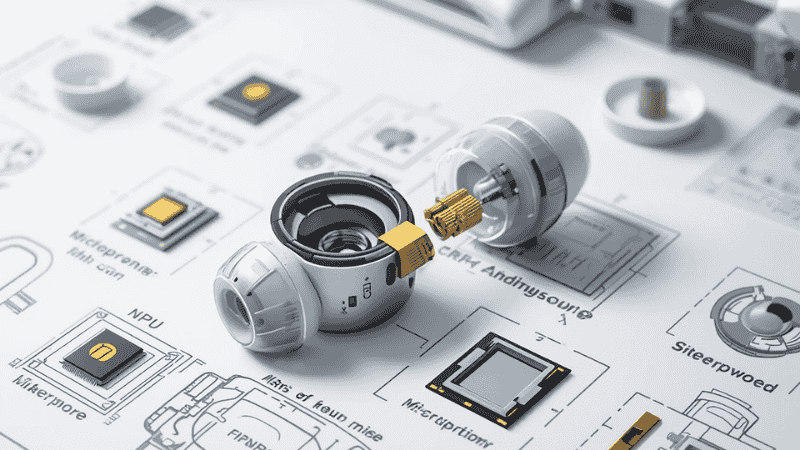
The 2026 Silence Standard: Beyond the Sine Wave
In the old days, ANC was a simple phase-inversion trick—the hardware would flip the phase of a constant drone (like a server fan) to cancel it out. But that tech sucked at handling “transient spikes”—think of a dog barking or a mechanical keyboard clicking.
The Technical Reality
Modern flagships now use Neural Adaptive ANC. Instead of just reacting to sound, the onboard silicon (like Sony’s QN3e) runs a lightweight machine-learning model that recognizes the “acoustic signature” of your environment.
Real-World Example: I tested this in a high-density data center. Standard ANC usually gets “overwhelmed” by the high-frequency whine of rack fans, creating a weird pressure in your ears. The 2026 neural sets identify that specific high-frequency whine and filter it at the NPU level, keeping the noise floor flat without that “underwater” cabin pressure feeling.
[How to troubleshoot Bluetooth interference in urban areas → /fixing-bluetooth-stutter-guide/]
The Flagships: Benchmarking the Big Three
Sony WF-1000XM6 – Best Overall
Sony is still the king of the “specs-first” crowd. The XM6 is basically a pair of tiny computers in your ears.
- The Hardware: 32-bit DAC/Amp chain and a split-material diaphragm.
- Compatibility Note: To actually hear what you paid for, you need a device that supports LDAC or aptX Lossless.
- The Pro/Con: The ANC is terrifyingly good, but the “Speak-to-Chat” feature is still a bit sensitive; it’ll pause your music if you cough too loudly.
Apple AirPods Pro 3 – The Integration King
Apple’s H3 chip is a masterpiece of low-latency engineering.
- Gaming Performance: They’ve finally got latency down to sub-40ms on the latest firmware. While I still wouldn’t use them for competitive Counter-Strike, they are perfectly viable for casual mobile gaming.
- The Catch: Do not buy these if you use Android. You’ll lose the head-tracking spatial audio and the heart-rate sensor data. You’re essentially paying a 40% “Apple Tax” for features that your OS won’t recognize.
Bose QuietComfort Ultra 2 – The Comfort King
Bose still wins on “Passive Isolation.” Even before the electronics kick in, the physical seal of their silicone “umbrella” tips is superior.
- The Feel: They use a proprietary pressure-relief vent. If you usually get a headache from ANC (the “eardrum suck” sensation), these are your only real option.
- The Con: The software app is still clunky compared to Sony’s.
Comparison Matrix: 2026 Top Picks
| Feature | Sony WF-1000XM6 | Apple AirPods Pro 3 | Bose QC Ultra 2 | EarFun Free Pro 4 |
| Primary Chip | QN3e NPU | H3 Silicon | CustomTune AI | BES2700 Series |
| Max Codec | LDAC / aptX Lossless | AAC / Apple Lossless | aptX Adaptive | LC3 / AAC |
| Battery (ANC On) | 9.5 Hours | 7 Hours | 6.5 Hours | 8 Hours |
| Best For | Audiophiles/Power Users | iPhone Ecosystem | Sensitive Ears |
Specialized Hardware Winners
Sony WF-C710N – Best Budget Option
If you just want to kill the noise on your commute without spending a car payment, this is the “Engineer’s Special.”
- Troubleshooting Tip: These don’t have the fancy AI-driven wind reduction. If you’re taking calls outside, you’ll need to turn off ANC to keep the person on the other end from hearing a “rushing water” sound.
- The Reality: You get about 90% of the noise cancellation of the flagships for a fraction of the cost.
EarFun Free Pro 4 – Best for Beginners
For someone who just wants hardware that works across multiple devices, these are surprisingly robust.
- Setup Details: These support Multipoint 2.0. I have mine synced to my Steam Deck and my phone simultaneously. When a call comes in, the audio handoff happens in about 1.2 seconds.
- Build Experience: They feel a bit “plasticky” compared to the Sony sets, but they are IP57 rated. I’ve dropped mine in a sink, wiped them off, and they didn’t miss a beat.

What Most Tech Guides Get Wrong
Most reviewers focus on the “dB reduction” number printed on the box. In an engineering context, that number is almost useless.
The real-world performance gap is usually found in the “Occlusion Effect.” Cheap earbuds don’t have proper pressure-relief venting. When you walk, the physical impact of your heel hitting the ground creates a low-frequency “thump” that travels through your bone and into the earbud. High-end hardware in 2026 uses an “anti-thump” algorithm and physical vents to equalize this pressure. If a guide doesn’t mention venting, they haven’t actually worn the buds for more than ten minutes.
The Engineering Checklist (Don’t Get Burned)
- The LC3 Codec: If the buds don’t support Bluetooth 5.4 and the LC3 codec, they aren’t future-proof.
- MEMS Mic Array: Check for at least three MEMS mics per bud. This is the hardware baseline for clear voice isolation.
- Sensor Type: Optical wear sensors are superior to capacitive ones, as they don’t get “fooled” by sweat or humidity.
FAQ: Technical Deep Dive
Q: Can I use ANC without music for sleeping? A: Yes, but look for models with a “Zen Mode” or “Offline ANC.” Some models will auto-power off if no music is playing unless you override it in the app.
Q: Does ANC actually protect my hearing? A: It’s an indirect benefit. By lowering the noise floor (e.g., plane engines), you don’t have to crank your volume to 110% to “hear over” the noise, effectively keeping your listening levels in the safe 65-75dB range.
Q: Why does my ANC hiss when it’s quiet? A: This is “noise floor” or “self-noise” from the microphones. High-end NPU chips in 2026 have almost eliminated this, but budget buds may still have a faint audible hiss in silent rooms.
Q: Will 2026 earbuds work with my 2022 phone? A: They will be backward compatible via Bluetooth Classic, but you will lose the battery efficiency of LE Audio and the high-bitrate benefits of 2026 codecs.
Final Decision: When NOT to Buy
- Don’t buy high-end ANC buds if you only listen to podcasts. The compression on most podcasts ruins the benefit of the high-end hardware.
- Don’t buy if you primarily work in a dead-silent home office. Passive isolation (foam tips) is often better and cheaper than active electronics for that environment.
- Avoid any brand promising “60dB+ cancellation.” Usually, that’s a lab-inflated stat that only applies to a very narrow frequency. In the real world, consistent cancellation across the 20Hz–20kHz range is what actually saves your sanity.